Yard Drainage Solutions in Sacramento & Northern California
French drains, catch basins, grading, and yard drainage systems. Fix standing water, protect your foundation, and stop killing your landscape. Licensed C-27 contractors.


Signs You Need a Drainage Solution
If you’ve got any of these problems, you’ve got a drainage issue:
Standing water in your yard more than a day or two after rain
Soggy, muddy lawn areas that never seem to dry out
Water pooling near your foundation, patio, or walkways
Erosion causing the soil to wash out of planter beds, slopes, or under fences
Dead or dying grass and plants in the same low spots year after year
Mosquitoes breeding in standing water
Overflowing downspouts or water pouring too close to the house
Mud being tracked inside from consistent wet spots
Sacramento’s mix of clay-heavy soils and concentrated winter rainfall (13–23 inches annually, mostly in December–March) means drainage problems are common. The good news: they’re all fixable.
Signs You Need a Drainage Solution
If you’ve got any of these problems, you’ve got a drainage issue:
Standing water in your yard more than a day or two after rain
Soggy, muddy lawn areas that never seem to dry out
Water pooling near your foundation, patio, or walkways
Erosion causing the soil to wash out of planter beds, slopes, or under fences
Dead or dying grass and plants in the same low spots year after year
Mosquitoes breeding in standing water
Overflowing downspouts or water pouring too close to the house
Mud being tracked inside from consistent wet spots
Sacramento’s mix of clay-heavy soils and concentrated winter rainfall (13–23 inches annually, mostly in December–March) means drainage problems are common. The good news: they’re all fixable.
Signs You Need a Drainage Solution
If you’ve got any of these problems, you’ve got a drainage issue:
Standing water in your yard more than a day or two after rain
Soggy, muddy lawn areas that never seem to dry out
Water pooling near your foundation, patio, or walkways
Erosion causing the soil to wash out of planter beds, slopes, or under fences
Dead or dying grass and plants in the same low spots year after year
Mosquitoes breeding in standing water
Overflowing downspouts or water pouring too close to the house
Mud being tracked inside from consistent wet spots
Sacramento’s mix of clay-heavy soils and concentrated winter rainfall (13–23 inches annually, mostly in December–March) means drainage problems are common. The good news: they’re all fixable.
Our Yard Drainage Services

French Drain Installation
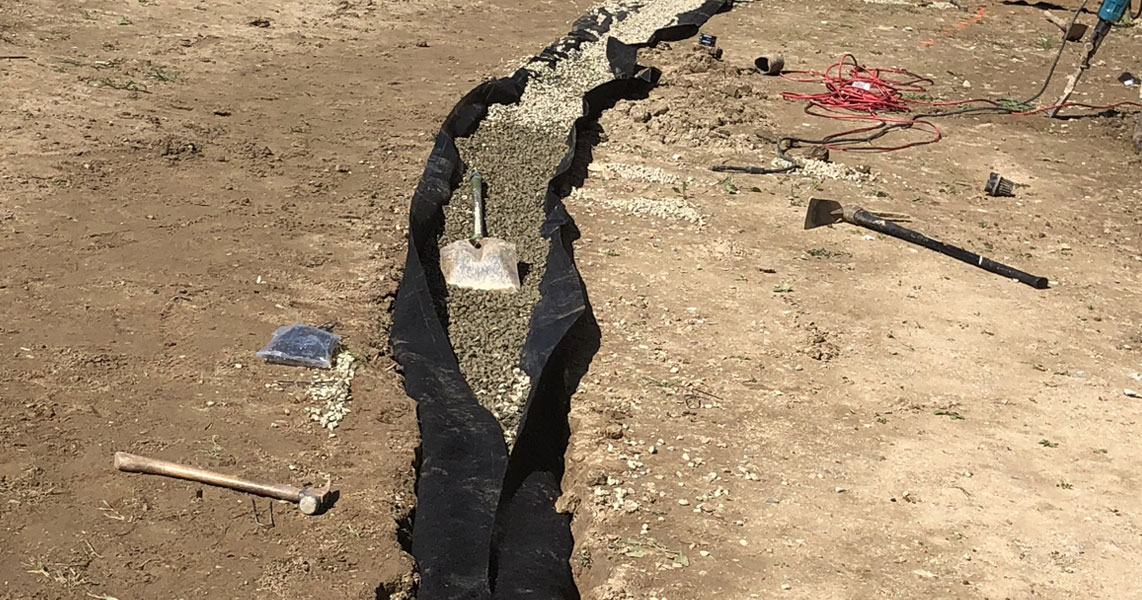
A perforated pipe in a gravel-filled trench that collects and redirects subsurface water. The gold standard for chronic wet spots and saturated lawn areas.
Catch Basins & Surface Drains
Grated drain boxes set at low points or under downspouts, piped to an outlet. Great for collecting runoff from hardscape and solving pooling issues.
Channel Drains
Long linear drains installed across driveways, patios, and pool decks to catch runoff before it moves elsewhere.
Downspout Extensions
Rigid or flexible pipe extending roof downspouts away from the foundation, often tied into a drain system with a pop-up emitter in the yard.
Yard Grading & Swales
Reshaping the slope of your yard to move water where you want it to go, often the first step before (or instead of) pipe-based solutions.
Dry Creek Beds
Decorative gravel and stone swales that double as a drainage feature and a landscape element. Beautiful and functional.
Foundation Drainage
Perimeter drains around foundations, basements, and crawl spaces to protect structural elements from water damage.
Hardscape Drainage Integration
When we install patios, walkways, or retaining walls, we engineer drainage into the design from day one.
Our Yard Drainage Services
French Drain Installation
A perforated pipe in a gravel-filled trench that collects and redirects subsurface water. The gold standard for chronic wet spots and saturated lawn areas.
Catch Basins & Surface Drains
Grated drain boxes set at low points or under downspouts, piped to an outlet. Great for collecting runoff from hardscape and solving pooling issues.
Channel Drains
Long linear drains installed across driveways, patios, and pool decks to catch runoff before it moves elsewhere.
Downspout Extensions
Rigid or flexible pipe extending roof downspouts away from the foundation, often tied into a drain system with a pop-up emitter in the yard.
Yard Grading & Swales
Reshaping the slope of your yard to move water where you want it to go, often the first step before (or instead of) pipe-based solutions.
Dry Creek Beds
Decorative gravel and stone swales that double as a drainage feature and a landscape element. Beautiful and functional.
Foundation Drainage
Perimeter drains around foundations, basements, and crawl spaces to protect structural elements from water damage.
Hardscape Drainage Integration
When we install patios, walkways, or retaining walls, we engineer drainage into the design from day one.
Our Yard Drainage Services
French Drain Installation
A perforated pipe in a gravel-filled trench that collects and redirects subsurface water. The gold standard for chronic wet spots and saturated lawn areas.
Catch Basins & Surface Drains
Grated drain boxes set at low points or under downspouts, piped to an outlet. Great for collecting runoff from hardscape and solving pooling issues.
Channel Drains
Long linear drains installed across driveways, patios, and pool decks to catch runoff before it moves elsewhere.
Downspout Extensions
Rigid or flexible pipe extending roof downspouts away from the foundation, often tied into a drain system with a pop-up emitter in the yard.
Yard Grading & Swales
Reshaping the slope of your yard to move water where you want it to go, often the first step before (or instead of) pipe-based solutions.
Dry Creek Beds
Decorative gravel and stone swales that double as a drainage feature and a landscape element. Beautiful and functional.
Foundation Drainage
Perimeter drains around foundations, basements, and crawl spaces to protect structural elements from water damage.
Hardscape Drainage Integration
When we install patios, walkways, or retaining walls, we engineer drainage into the design from day one.
How a French Drain Works
A French drain is a trench dug 18–24 inches deep and 6–12 inches wide, filled with drainage gravel around a perforated pipe. Water seeps through the soil into the gravel, enters the pipe through the perforations, and flows by gravity to a daylight outlet, catch basin, or storm drain. A proper French drain includes:
Geotextile fabric lining the trench to prevent soil from clogging the gravel
3–4 inches of drainage gravel (typically 3/4" washed stone) at the bottom
4" perforated PVC or corrugated pipe with holes facing down
Gravel backfill covering the pipe
Fabric closure wrapping the top of the gravel
Topsoil and grass/mulch to finish the surface
A properly installed French drain lasts 30–40 years.
How a French Drain Works
A French drain is a trench dug 18–24 inches deep and 6–12 inches wide, filled with drainage gravel around a perforated pipe. Water seeps through the soil into the gravel, enters the pipe through the perforations, and flows by gravity to a daylight outlet, catch basin, or storm drain. A proper French drain includes:
Geotextile fabric lining the trench to prevent soil from clogging the gravel
3–4 inches of drainage gravel (typically 3/4" washed stone) at the bottom
4" perforated PVC or corrugated pipe with holes facing down
Gravel backfill covering the pipe
Fabric closure wrapping the top of the gravel
Topsoil and grass/mulch to finish the surface
A properly installed French drain lasts 30–40 years.
How a French Drain Works
A French drain is a trench dug 18–24 inches deep and 6–12 inches wide, filled with drainage gravel around a perforated pipe. Water seeps through the soil into the gravel, enters the pipe through the perforations, and flows by gravity to a daylight outlet, catch basin, or storm drain. A proper French drain includes:
Geotextile fabric lining the trench to prevent soil from clogging the gravel
3–4 inches of drainage gravel (typically 3/4" washed stone) at the bottom
4" perforated PVC or corrugated pipe with holes facing down
Gravel backfill covering the pipe
Fabric closure wrapping the top of the gravel
Topsoil and grass/mulch to finish the surface
A properly installed French drain lasts 30–40 years.
How Much Do Drainage Solutions Cost in Sacramento?
Typical residential drainage costs in Sacramento:
Simple downspout extension (one spout): $300 – $800
Catch basin and short drain run: $600 – $1,500
French drain (per linear foot): $18 – $100 installed
Foundation perimeter drain: $5,000 – $15,000+
Costs vary based on pipe depth, access, soil conditions, distance to outlet, and whether existing hardscape needs to be removed and replaced.
How Much Do Drainage Solutions Cost in Sacramento?
Typical residential drainage costs in Sacramento:
Simple downspout extension (one spout): $300 – $800
Catch basin and short drain run: $600 – $1,500
French drain (per linear foot): $18 – $100 installed
Foundation perimeter drain: $5,000 – $15,000+
Costs vary based on pipe depth, access, soil conditions, distance to outlet, and whether existing hardscape needs to be removed and replaced.
How Much Do Drainage Solutions Cost in Sacramento?
Typical residential drainage costs in Sacramento:
Simple downspout extension (one spout): $300 – $800
Catch basin and short drain run: $600 – $1,500
French drain (per linear foot): $18 – $100 installed
Foundation perimeter drain: $5,000 – $15,000+
Costs vary based on pipe depth, access, soil conditions, distance to outlet, and whether existing hardscape needs to be removed and replaced.
Sacramento’s Unique Drainage Challenges
Sacramento isn’t a typical drainage environment. Three factors make it harder than most:
1. Clay soil. Clay doesn’t drain. Water sits on top, saturates slowly, and then takes forever to release. Most of the Sacramento Valley is clay or clay-heavy loam.
2. Concentrated winter rainfall. Sacramento gets most of its 13–23 inches of annual rain between December and March, often in intense multi-day atmospheric river events. Yards that look fine in summer flood in winter.
3. Flat lots. Many Sacramento neighborhoods are built on dead-flat land with minimal natural slope, meaning water has nowhere to go unless it’s actively moved.
The combination of heavy rain, slow soil, no slope is why so many Sacramento homes have drainage problems. Fortunately, they all have solutions.
Sacramento's Unique Drainage Challenges
Sacramento isn’t a typical drainage environment. Three factors make it harder than most:
1. Clay soil. Clay doesn’t drain. Water sits on top, saturates slowly, and then takes forever to release. Most of the Sacramento Valley is clay or clay-heavy loam.
2. Concentrated winter rainfall. Sacramento gets most of its 13–23 inches of annual rain between December and March, often in intense multi-day atmospheric river events. Yards that look fine in summer flood in winter.
3. Flat lots. Many Sacramento neighborhoods are built on dead-flat land with minimal natural slope, meaning water has nowhere to go unless it’s actively moved.
The combination of heavy rain, slow soil, no slope is why so many Sacramento homes have drainage problems. Fortunately, they all have solutions.
Sacramento's Unique Drainage Challenges
Sacramento isn’t a typical drainage environment. Three factors make it harder than most:
1. Clay soil. Clay doesn’t drain. Water sits on top, saturates slowly, and then takes forever to release. Most of the Sacramento Valley is clay or clay-heavy loam.
2. Concentrated winter rainfall. Sacramento gets most of its 13–23 inches of annual rain between December and March, often in intense multi-day atmospheric river events. Yards that look fine in summer flood in winter.
3. Flat lots. Many Sacramento neighborhoods are built on dead-flat land with minimal natural slope, meaning water has nowhere to go unless it’s actively moved.
The combination of heavy rain, slow soil, no slope is why so many Sacramento homes have drainage problems. Fortunately, they all have solutions.
Our Drainage Assessment & Design Process
A Simple & Straight-Forward Process
Step 01
Site Walk During Or After Rain
We understand it’s not always possible, but the best time to diagnose a drainage problem is when it’s actually happening. If we can see the water, we can see the path.
Step 02
Identify The Source
Is it roof runoff? Yard saturation? Uphill neighbor? A buried pipe that’s broken or collapsed?
Step 03
Map The Fix
We sketch the proposed solution. French drain, catch basins, regrading (or a combination), and a proper outlet path.
Step 04
Written Estimate
As always, you will receive clear scope and pricing details.
Step 05
Installation
We excavate, install pipe and drainage materials, connect outlets, backfill, restore the surface (grass, mulch, or hardscape), and test the system.
When to Integrate Drainage with Landscape or Hardscape Work
If you’re planning any of the following, drainage should be part of the conversation from day one:
New patio or hardscape: drainage under and around pavers is critical
Artificial turf installation: proper base drainage determines turf lifespan
Retaining walls: drainage behind the wall is the #1 factor in whether it lasts
New landscape installation: drainage planning saves you from redoing it later
Foundation work: perimeter drains protect against structural damage
We handle all of the above as part of our full-service installation.
When to Integrate Drainage with Landscape or Hardscape Work
If you’re planning any of the following, drainage should be part of the conversation from day one:
New patio or hardscape: drainage under and around pavers is critical
Artificial turf installation: proper base drainage determines turf lifespan
Retaining walls: drainage behind the wall is the #1 factor in whether it lasts
New landscape installation: drainage planning saves you from redoing it later
Foundation work: perimeter drains protect against structural damage
We handle all of the above as part of our full-service installation.
When to Integrate Drainage with Landscape or Hardscape Work
If you’re planning any of the following, drainage should be part of the conversation from day one:
New patio or hardscape: drainage under and around pavers is critical
Artificial turf installation: proper base drainage determines turf lifespan
Retaining walls: drainage behind the wall is the #1 factor in whether it lasts
New landscape installation: drainage planning saves you from redoing it later
Foundation work: perimeter drains protect against structural damage
We handle all of the above as part of our full-service installation.
Contact Us Today!
We’re here to answer all your questions.
Contact Us Today!
We’re here to answer all your questions.
Contact Us Today!
We’re here to answer all your questions.
Stop Fighting Your Yard
Water will always find a way. Natural Tech makes certain that water won’t find a way into your home.
Stop Fighting Your Yard
Water will always find a way. Natural Tech makes certain that water won’t find a way into your home.
Stop Fighting Your Yard
Water will always find a way. Natural Tech makes certain that water won’t find a way into your home.
Frequently Asked Questions
Our dedicated team of experts is committed to understanding your unique needs and objectives, working closely with you to develop and execute your vision.
How do I know if I need a French drain?
If you have standing water or soggy soil in the same spots for more than 24–48 hours after rain, you likely need a French drain or a combination drainage solution. An on-site assessment will confirm.
How deep should a French drain be?
18–24 inches deep for most residential applications. Deeper if the drain needs to handle significant subsurface water or tie into a deeper outlet.
How long do French drains last?
A properly installed French drain with geotextile fabric and clean gravel lasts 30–40 years. Without fabric, silt clogs the gravel and the drain fails in 5–10 years.
Do French drains really work?
Yes, when installed correctly. Most “French drains that don’t work” either weren’t installed with enough slope, used the wrong materials, lacked geotextile fabric, or didn’t have a proper outlet.
Can you install a French drain yourself?
Small decorative French drains, yes. Functional drainage systems that need to handle real water, no. Grade, outlet placement, and materials are too easy to get wrong.
Do I need a permit for drainage work?
Most residential drainage work in Sacramento doesn’t require a permit. Tying into municipal storm drains usually does.
What’s the difference between a French drain and a catch basin?
A French drain collects subsurface water through a perforated pipe in gravel. A catch basin is a surface drain. A grated box that catches surface runoff. Most complete drainage systems use both.
Does homeowners insurance cover drainage problems?
Typically, no. Drainage issues are usually considered maintenance rather than sudden damage. That’s why fixing drainage proactively saves money.
Frequently Asked Questions
Our dedicated team of experts is committed to understanding your unique needs and objectives, working closely with you to develop and execute your vision.
How do I know if I need a French drain?
If you have standing water or soggy soil in the same spots for more than 24–48 hours after rain, you likely need a French drain or a combination drainage solution. An on-site assessment will confirm.
How deep should a French drain be?
18–24 inches deep for most residential applications. Deeper if the drain needs to handle significant subsurface water or tie into a deeper outlet.
How long do French drains last?
A properly installed French drain with geotextile fabric and clean gravel lasts 30–40 years. Without fabric, silt clogs the gravel and the drain fails in 5–10 years.
Do French drains really work?
Yes, when installed correctly. Most “French drains that don’t work” either weren’t installed with enough slope, used the wrong materials, lacked geotextile fabric, or didn’t have a proper outlet.
Can you install a French drain yourself?
Small decorative French drains, yes. Functional drainage systems that need to handle real water, no. Grade, outlet placement, and materials are too easy to get wrong.
Do I need a permit for drainage work?
Most residential drainage work in Sacramento doesn’t require a permit. Tying into municipal storm drains usually does.
What’s the difference between a French drain and a catch basin?
A French drain collects subsurface water through a perforated pipe in gravel. A catch basin is a surface drain. A grated box that catches surface runoff. Most complete drainage systems use both.
Does homeowners insurance cover drainage problems?
Typically, no. Drainage issues are usually considered maintenance rather than sudden damage. That’s why fixing drainage proactively saves money.
Frequently Asked Questions
Our dedicated team of experts is committed to understanding your unique needs and objectives, working closely with you to develop and execute your vision.
How do I know if I need a French drain?
How deep should a French drain be?
How long do French drains last?
Do French drains really work?
Can you install a French drain yourself?
Do I need a permit for drainage work?
What’s the difference between a French drain and a catch basin?
Does homeowners insurance cover drainage problems?
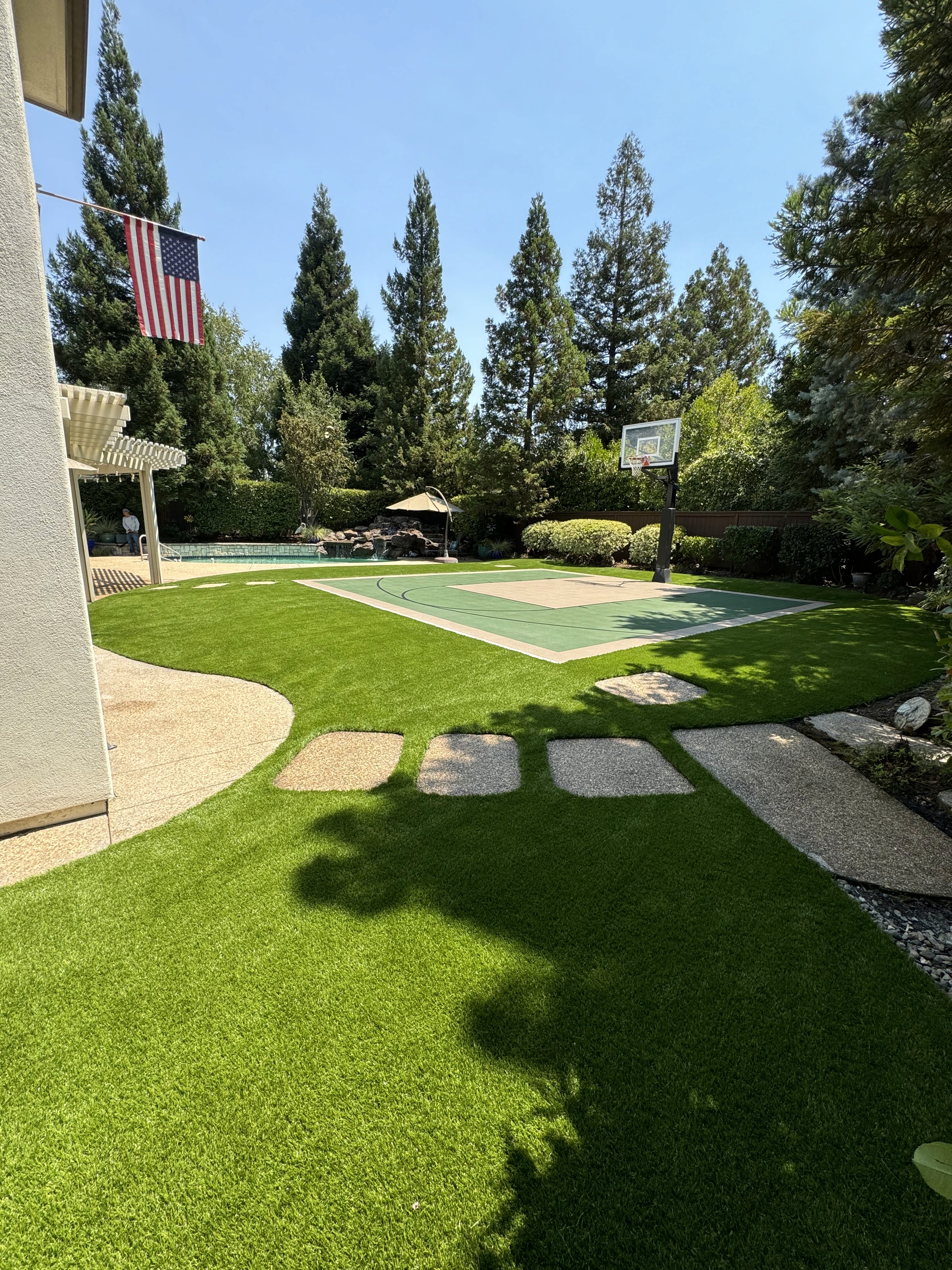
We install artificial grass lawns and putting greens for both residential and commercial applications, with 40+ years of proven experience in landscape architecture and design.
Follow Us on Social Media:
Quick Links
© 2026. All Rights Reserved.
We install artificial grass lawns and putting greens for both residential and commercial applications, with 40+ years of proven experience in landscape architecture and design.
Follow Us on Social Media:
Quick Links
© 2026. All Rights Reserved.
We install artificial grass lawns and putting greens for both residential and commercial applications, with 40+ years of proven experience in landscape architecture and design.
Follow Us on Social Media:
Quick Links
© 2026. All Rights Reserved.