Retaining Wall Contractors in Sacramento, Granite Bay & Lake Tahoe
Boulder, stone, block, concrete, and timber retaining walls engineered for proper drainage, built to code, and designed to last decades. Licensed C-27 contractors with 40+ years of experience.

Why a Retaining Wall?
Retaining walls solve structural problems and create beautiful yards at the same time. Most clients come to us for one of these reasons:
Sloped yards that need leveling for a patio, lawn, or garden area.
Erosion control on hillsides, near foundations, or along driveways.
Creating usable space on properties with significant grade changes.
Terraced garden beds for planting on a slope.
Foundation protection from hillside pressure and runoff.
Decorative features such as seating walls, planter walls, entry features.
A properly built retaining wall does all of this while lasting 50–100+ years. A poorly built one can fail in under five.
Why a Retaining Wall?
Retaining walls solve structural problems and create beautiful yards at the same time. Most clients come to us for one of these reasons:
Sloped yards that need leveling for a patio, lawn, or garden area.
Erosion control on hillsides, near foundations, or along driveways.
Creating usable space on properties with significant grade changes.
Terraced garden beds for planting on a slope.
Foundation protection from hillside pressure and runoff.
Decorative features such as seating walls, planter walls, entry features.
A properly built retaining wall does all of this while lasting 50–100+ years. A poorly built one can fail in under five.
Why a Retaining Wall?
Retaining walls solve structural problems and create beautiful yards at the same time. Most clients come to us for one of these reasons:
Sloped yards that need leveling for a patio, lawn, or garden area.
Erosion control on hillsides, near foundations, or along driveways.
Creating usable space on properties with significant grade changes.
Terraced garden beds for planting on a slope.
Foundation protection from hillside pressure and runoff.
Decorative features such as seating walls, planter walls, entry features.
A properly built retaining wall does all of this while lasting 50–100+ years. A poorly built one can fail in under five.
Types of Retaining Walls We Build

Boulder Walls
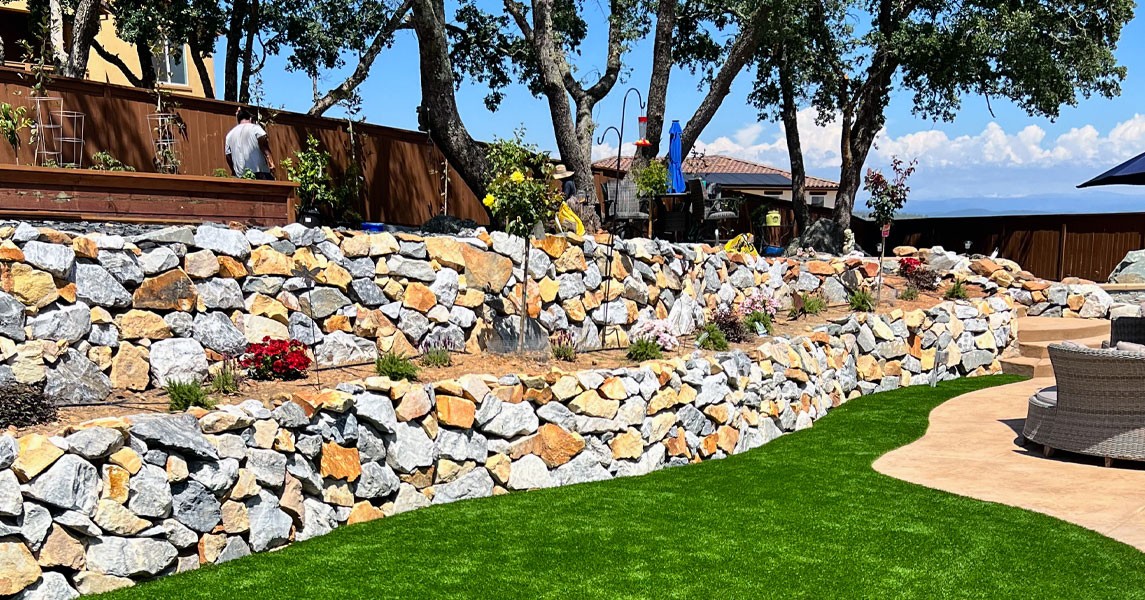
Natural fieldstone and granite boulders stacked dry or mortared. Rustic blends into natural landscapes and is excellent for Tahoe and foothill properties. $35 – $58/sq ft.
Poured Concrete Walls
Structural, clean-line, and the strongest option for tall walls. Can be left plain, stamped, or finished with stone veneer. $35 – $51/sq ft for basic; more for finishes.
Interlocking Block Walls
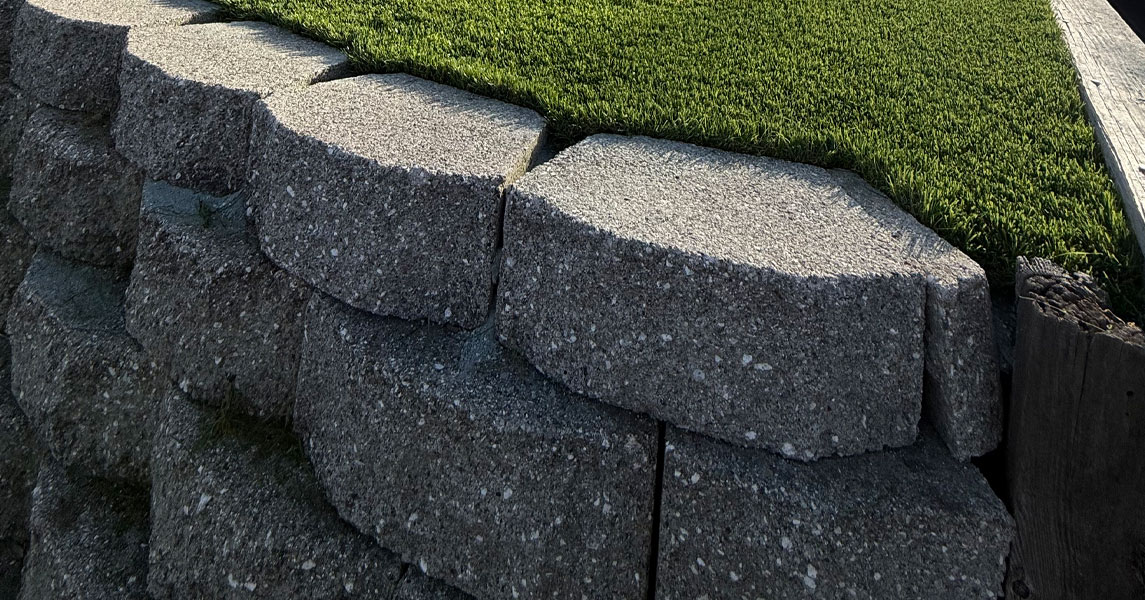
Pavestone, Allan Block, Versa-Lok, and similar systems. Cost-effective, comes in many colors and textures, and is great for 3–6-foot walls. $24 – $46/sq ft.
Natural Stone Walls (dry-stack and mortared)
Premium appearance, can be built with flagstone, granite, limestone, or local fieldstone. $35 – $58/sq ft.
Timber Walls
Pressure-treated wood or railroad ties. Budget-friendly ($20 – $33/sq ft) but shorter lifespan; typically 15–25 years.
Gabion Walls
Wire mesh cages filled with stone. Excellent drainage, unique appearance, $19 – $35/sq ft.
Concrete Block (CMU) Walls
Often finished with stucco or stone veneer. $21 – $35/sq ft for basic block; more with finishes.
Types of Retaining Walls We Build
Boulder Walls
Natural fieldstone and granite boulders stacked dry or mortared. Rustic blends into natural landscapes and is excellent for Tahoe and foothill properties. $35 – $58/sq ft.
Poured Concrete Walls
Structural, clean-line, and the strongest option for tall walls. Can be left plain, stamped, or finished with stone veneer. $35 – $51/sq ft for basic; more for finishes.
Interlocking Block Walls
Pavestone, Allan Block, Versa-Lok, and similar systems. Cost-effective, comes in many colors and textures, and is great for 3–6-foot walls. $24 – $46/sq ft.
Natural Stone Walls (dry-stack and mortared)
Premium appearance, can be built with flagstone, granite, limestone, or local fieldstone. $35 – $58/sq ft.
Timber Walls
Pressure-treated wood or railroad ties. Budget-friendly ($20 – $33/sq ft) but shorter lifespan; typically 15–25 years.
Gabion Walls
Wire mesh cages filled with stone. Excellent drainage, unique appearance, $19 – $35/sq ft.
Concrete Block (CMU) Walls
Often finished with stucco or stone veneer. $21 – $35/sq ft for basic block; more with finishes.
Types of Retaining Walls We Build
Boulder Walls
Natural fieldstone and granite boulders stacked dry or mortared. Rustic blends into natural landscapes and is excellent for Tahoe and foothill properties. $35 – $58/sq ft.
Poured Concrete Walls
Structural, clean-line, and the strongest option for tall walls. Can be left plain, stamped, or finished with stone veneer. $35 – $51/sq ft for basic; more for finishes.
Interlocking Block Walls
Pavestone, Allan Block, Versa-Lok, and similar systems. Cost-effective, comes in many colors and textures, and is great for 3–6-foot walls. $24 – $46/sq ft.
Natural Stone Walls (dry-stack and mortared)
Premium appearance, can be built with flagstone, granite, limestone, or local fieldstone. $35 – $58/sq ft.
Timber Walls
Pressure-treated wood or railroad ties. Budget-friendly ($20 – $33/sq ft) but shorter lifespan; typically 15–25 years.
Gabion Walls
Wire mesh cages filled with stone. Excellent drainage, unique appearance, $19 – $35/sq ft.
Concrete Block (CMU) Walls
Often finished with stucco or stone veneer. $21 – $35/sq ft for basic block; more with finishes.
Proper Retaining Wall Construction
What’s Actually in the Wall
A retaining wall is only as good as what’s behind it. The most common reason walls fail in Sacramento is poor drainage. Hydrostatic pressure builds up behind the wall and pushes it over. Here’s what goes into every wall we build:
Proper Excavation
To the correct depth based on wall height and soil conditions.
Compacted Gravel Base
Typically 6+ inches of crushed aggregate for stable footing.
Geotextile Fabric
Used to separate soil from drainage aggregate.
Perforated Drain Pipe (French Drain)
Placed at the base of the wall, wrapped in gravel, with a daylight outlet.
Gravel Backfill
Behind the wall for water to drain through.
Proper Wall Construction
Whether that’s poured concrete, stacked stone, or interlocking block, built to manufacturer specs or engineered drawings.
Compacted Soil Backfill
Placed above the drainage gravel.
Cap Course Or Finish
Placed on top for the final look.
Proper Retaining Wall Construction
What’s Actually in the Wall
A retaining wall is only as good as what’s behind it. The most common reason walls fail in Sacramento is poor drainage. Hydrostatic pressure builds up behind the wall and pushes it over. Here’s what goes into every wall we build:
Proper Excavation
To the correct depth based on wall height and soil conditions.
Compacted Gravel Base
Typically 6+ inches of crushed aggregate for stable footing.
Geotextile Fabric
Used to separate soil from drainage aggregate.
Perforated Drain Pipe (French Drain)
Placed at the base of the wall, wrapped in gravel, with a daylight outlet.
Gravel Backfill
Behind the wall for water to drain through.
Proper Wall Construction
Whether that’s poured concrete, stacked stone, or interlocking block, built to manufacturer specs or engineered drawings.
Compacted Soil Backfill
Placed above the drainage gravel.
Cap Course Or Finish
Placed on top for the final look.
Proper Retaining Wall Construction
What’s Actually in the Wall
A retaining wall is only as good as what’s behind it. The most common reason walls fail in Sacramento is poor drainage. Hydrostatic pressure builds up behind the wall and pushes it over. Here’s what goes into every wall we build:
Proper Excavation
To the correct depth based on wall height and soil conditions.
Compacted Gravel Base
Typically 6+ inches of crushed aggregate for stable footing.
Geotextile Fabric
Used to separate soil from drainage aggregate.
Perforated Drain Pipe (French Drain)
Placed at the base of the wall, wrapped in gravel, with a daylight outlet.
Gravel Backfill
Behind the wall for water to drain through.
Proper Wall Construction
Whether that’s poured concrete, stacked stone, or interlocking block, built to manufacturer specs or engineered drawings.
Compacted Soil Backfill
Placed above the drainage gravel.
Cap Course Or Finish
Placed on top for the final look.
How Much Does a Retaining Wall Cost in Sacramento?
Retaining wall costs in Sacramento typically run:
Structural walls (1–6 feet, with drainage): $55 – $150 per square foot
Engineered walls (over 6 feet or on slopes): Call for quote 1 (916) 240-4524
Total project costs usually range from $4,000 – $25,000, depending on size, materials, site access, and soil conditions.
How Much Does a Retaining Wall Cost in Sacramento?
Retaining wall costs in Sacramento typically run:
Structural walls (1–6 feet, with drainage): $55 – $150 per square foot
Engineered walls (over 6 feet or on slopes): Call for quote 1 (916) 240-4524
Total project costs usually range from $4,000 – $25,000, depending on size, materials, site access, and soil conditions.
How Much Does a Retaining Wall Cost in Sacramento?
Retaining wall costs in Sacramento typically run:
Structural walls (1–6 feet, with drainage): $55 – $150 per square foot
Engineered walls (over 6 feet or on slopes): Call for quote 1 (916) 240-4524
Total project costs usually range from $4,000 – $25,000, depending on size, materials, site access, and soil conditions.
Do I Need a Permit for a Retaining Wall in California?
Walls over 4 feet tall (measured from the bottom of the footing to the top of the wall) typically require a building permit and may require engineered drawings. Walls supporting surcharge loads (like a driveway or pool above them) often require engineering regardless of height. Shorter decorative garden walls usually don’t require a permit.
We handle permit applications and can coordinate structural engineering when needed.
Do I Need a Permit for a Retaining Wall in California?
Walls over 4 feet tall (measured from the bottom of the footing to the top of the wall) typically require a building permit and may require engineered drawings. Walls supporting surcharge loads (like a driveway or pool above them) often require engineering regardless of height. Shorter decorative garden walls usually don’t require a permit.
We handle permit applications and can coordinate structural engineering when needed.
Do I Need a Permit for a Retaining Wall in California?
Walls over 4 feet tall (measured from the bottom of the footing to the top of the wall) typically require a building permit and may require engineered drawings. Walls supporting surcharge loads (like a driveway or pool above them) often require engineering regardless of height. Shorter decorative garden walls usually don’t require a permit.
We handle permit applications and can coordinate structural engineering when needed.
Our Retaining Wall Build Process
A Simple & Straight-Forward Process
Step 01
Site Assessment
We walk the property, evaluate slope, soil, drainage, and existing structures.
Step 02
Engineering (when required)
For walls over 4 feet or on difficult sites, we coordinate with structural engineers.
Step 03
Permits
We will aid you in pulling permits.
Step 04
Excavation
Dig to proper depth based on wall height and soil.
Step 05
Base Preparation
Compacted gravel base, typically 6 inches or more.
Step 06
Drainage Installation
Perforated pipe, gravel backfill, geotextile fabric.
Step 07
Wall Construction
Built to spec, course by course, with proper compaction between lifts for block walls.
Step 08
Finishing
Cap course, cleanup, landscape integration.
Contact Us Today!
We’re here to answer all your questions.
Contact Us Today!
We’re here to answer all your questions.
Contact Us Today!
We’re here to answer all your questions.
Build a Wall That Lasts
Remember, if a contractor bids a retaining wall without drainage pipe and gravel backfill, walk away. Then reach out to Natural Tech to get the job done right.
Build a Wall That Lasts
Remember, if a contractor bids a retaining wall without drainage pipe and gravel backfill, walk away. Then reach out to Natural Tech to get the job done right.
Build a Wall That Lasts
Remember, if a contractor bids a retaining wall without drainage pipe and gravel backfill, walk away. Then reach out to Natural Tech to get the job done right.
Frequently Asked Questions
Our dedicated team of experts is committed to understanding your unique needs and objectives, working closely with you to develop and execute your vision.
How long does a retaining wall last?
A properly built retaining wall with adequate drainage lasts 50–100+ years for stone, concrete, and interlocking block. Timber walls typically last 15–25 years.
What’s the cheapest retaining wall material?
Timber/wood and gabion walls are the most budget-friendly options at $19 – $33 per square foot. However, timber has a shorter lifespan, so the long-term cost can be higher.
What’s the best retaining wall material?
For most Sacramento residential applications, we recommend interlocking concrete block (like Allan Block or Versa-Lok) for walls under 4 feet, and poured concrete or engineered block for taller walls. Natural stone is the premium choice when budget allows.
Can you build a retaining wall on a slope?
Yes! That’s actually the most common application. Sloped sites require additional engineering and drainage consideration, which is why working with an experienced contractor matters.
Do retaining walls need drainage?
Absolutely. Hydrostatic pressure from trapped water is the #1 cause of retaining wall failure. Every wall we build includes a perforated drain pipe at the base, gravel backfill, and a daylight outlet for water to escape.
How deep should a retaining wall footing be?
Typically 6–12 inches below grade for most residential walls, depending on wall height, soil type, and local frost line. Taller walls and engineered walls often require deeper footings.
Can I build a retaining wall myself?
For decorative garden walls under 2 feet with proper drainage, yes. Anything taller or holding back significant soil load should be built by a licensed contractor. Failure can be dangerous and expensive to fix.
Frequently Asked Questions
Our dedicated team of experts is committed to understanding your unique needs and objectives, working closely with you to develop and execute your vision.
How long does a retaining wall last?
A properly built retaining wall with adequate drainage lasts 50–100+ years for stone, concrete, and interlocking block. Timber walls typically last 15–25 years.
What’s the cheapest retaining wall material?
Timber/wood and gabion walls are the most budget-friendly options at $19 – $33 per square foot. However, timber has a shorter lifespan, so the long-term cost can be higher.
What’s the best retaining wall material?
For most Sacramento residential applications, we recommend interlocking concrete block (like Allan Block or Versa-Lok) for walls under 4 feet, and poured concrete or engineered block for taller walls. Natural stone is the premium choice when budget allows.
Can you build a retaining wall on a slope?
Yes! That’s actually the most common application. Sloped sites require additional engineering and drainage consideration, which is why working with an experienced contractor matters.
Do retaining walls need drainage?
Absolutely. Hydrostatic pressure from trapped water is the #1 cause of retaining wall failure. Every wall we build includes a perforated drain pipe at the base, gravel backfill, and a daylight outlet for water to escape.
How deep should a retaining wall footing be?
Typically 6–12 inches below grade for most residential walls, depending on wall height, soil type, and local frost line. Taller walls and engineered walls often require deeper footings.
Can I build a retaining wall myself?
For decorative garden walls under 2 feet with proper drainage, yes. Anything taller or holding back significant soil load should be built by a licensed contractor. Failure can be dangerous and expensive to fix.
Frequently Asked Questions
Our dedicated team of experts is committed to understanding your unique needs and objectives, working closely with you to develop and execute your vision.
How long does a retaining wall last?
What’s the cheapest retaining wall material?
What’s the best retaining wall material?
Can you build a retaining wall on a slope?
Do retaining walls need drainage?
How deep should a retaining wall footing be?
Can I build a retaining wall myself?
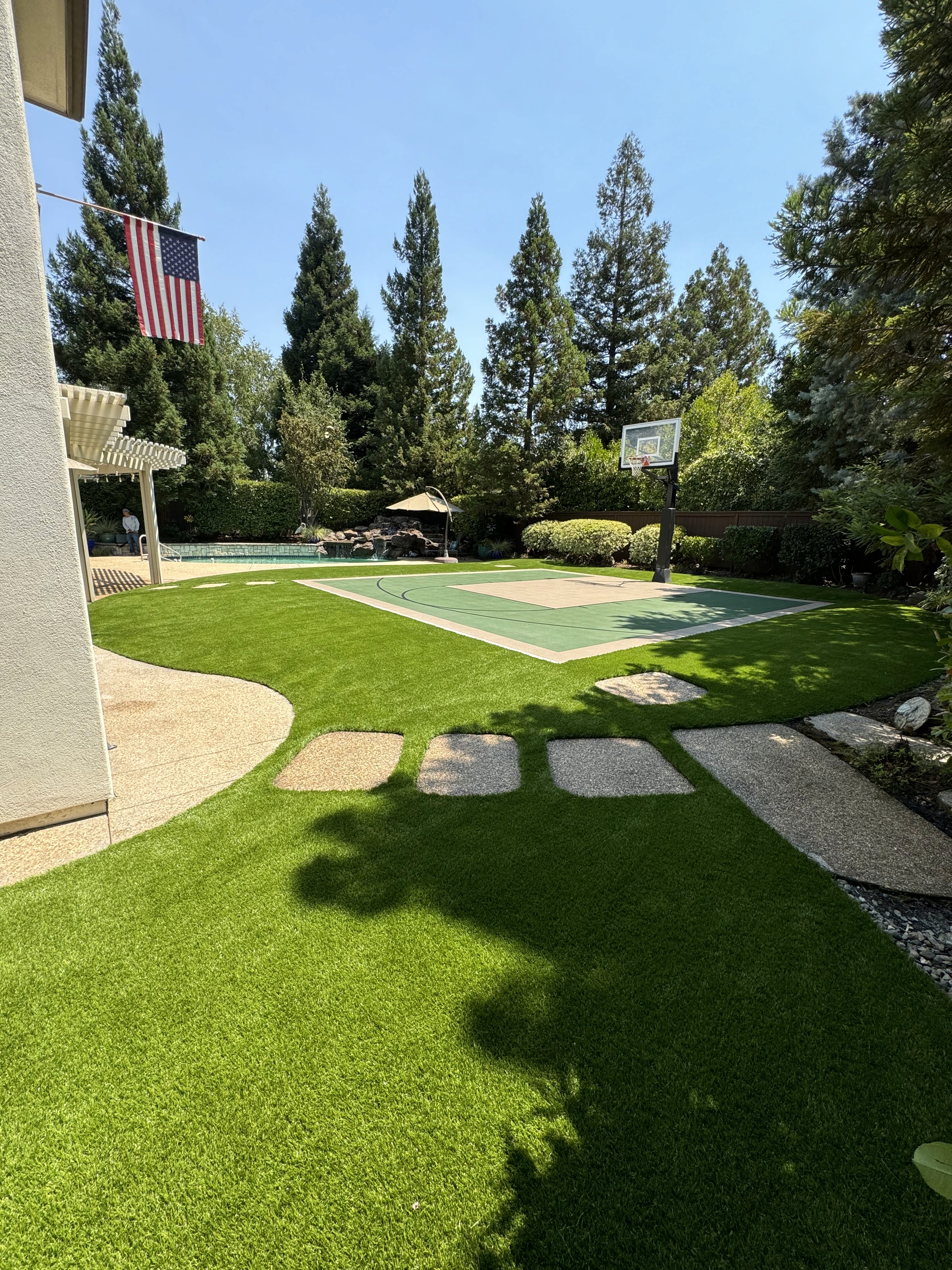
We install artificial grass lawns and putting greens for both residential and commercial applications, with 40+ years of proven experience in landscape architecture and design.
Follow Us on Social Media:
Quick Links
© 2026. All Rights Reserved.
We install artificial grass lawns and putting greens for both residential and commercial applications, with 40+ years of proven experience in landscape architecture and design.
Follow Us on Social Media:
Quick Links
© 2026. All Rights Reserved.
We install artificial grass lawns and putting greens for both residential and commercial applications, with 40+ years of proven experience in landscape architecture and design.
Follow Us on Social Media:
Quick Links
© 2026. All Rights Reserved.